

Antonio Rosino (1942–2026): Player, Teacher, Guardian of Italian Chess History
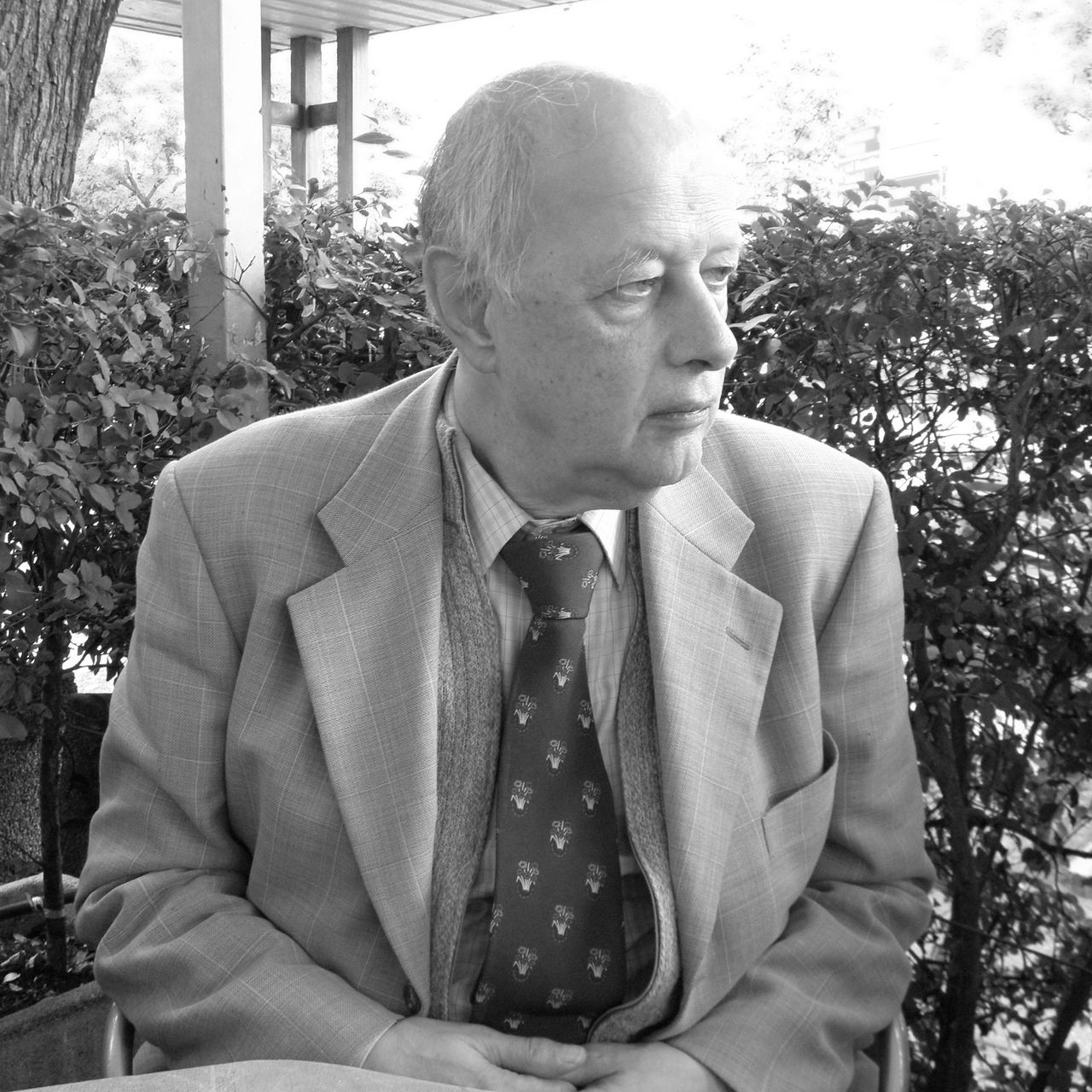
On 17 August 2026, Antonio Rosino died in Venice at the age of 84. He was a FIDE Master, three-time Italian Junior Champion, five-time Italian Senior Champion, mathematics teacher and the foremost chronicler of Italian chess. In his memory, we publish two texts: Bruno Trangoni traces his life, from his childhood in Cannaregio and his introduction to chess in 1956 to his achievements over the board. Luca D’Ambrosio and Michael Negele honour his historiographical and bibliographical legacy, including the rescue of the Central Library of the Italian Chess Federation.
Antonio Rosino: The Master of Venetian Chess
A Comprehensive Biographical Report Personal Background and Academic Pursuits in Venice
by Bruno Trangoni
Antonio Rosino was deeply rooted in the historic urban fabric of Venice, spending his entire life within the Sestiere of Cannaregio. His early childhood home was situated in Calle della Pegola, a narrow side street to the left of Strada Nova when approaching from Campo SS. Apostoli. Following his marriage, Rosino relocated a short distance to Fondamenta de la Misericordia, before eventually returning to Strada Nova, residing on the same side of the street and within a mere 100 meters of his childhood residence. Rosino’s educational trajectory began in Cannaregio at the Scuola Elementare Diedo. He subsequently attended middle school at the Scuola Media Marco Polo (later renamed Morosini), located in the San Stae district—an area historically described by Venetians as "di là dell'acqua" (across the water). For his secondary education, he attended the prestigious Liceo Scientifico G.B. Benedetti. Upon completing high school, Rosino initially enrolled in the Engineering faculty at the University of Padua. He later reflected that this choice was a significant error in judgment. While he found mathematical analysis intuitive and easy to master, he struggled immensely with technical drawing (disegno), an area he found nearly impossible to navigate. After several years in Padua, during which he passed only five examinations, Rosino abandoned engineering to pursue a degree in Mathematics. Following his university studies, Rosino returned to his high school alma mater, Liceo Scientifico G.B. Benedetti, where he built a distinguished career as a high school mathematics educator. (From 1966 until his retirement in 2003 - MN.)
Induction into Chess and Early Club Experience (October 1956) - The Catalyst and First Encounters
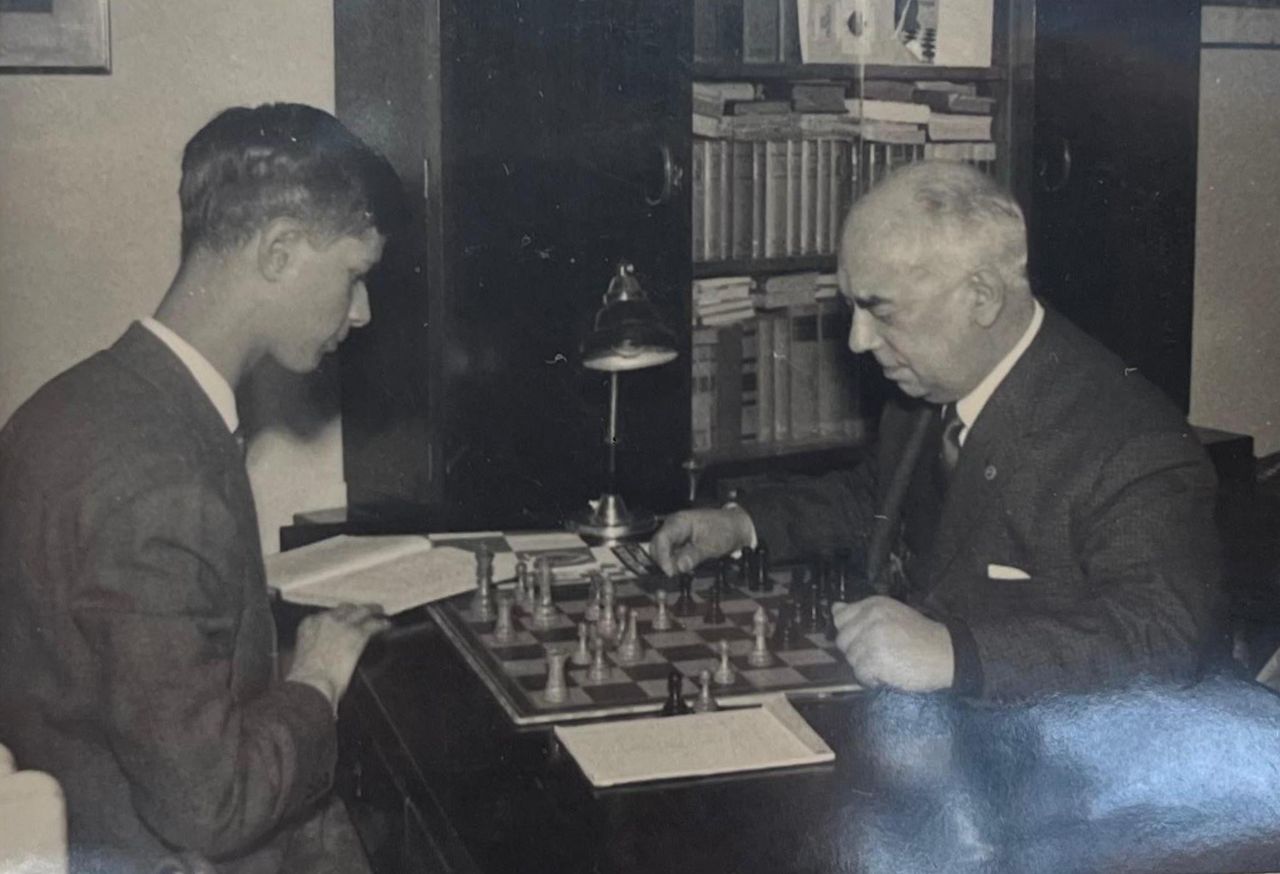
In October 1956, fourteen-year-old Antonio Rosino was introduced to competitive chess through a rapid sequence of chance events in central Venice:
The Uncle's Gift: Rosino's uncle, Licinio — a railway worker stationed in Padua who returned home to Venice on Friday evenings — met young Rosino on a Saturday morning immediately after school. Licinio brought him to a local bookstore and purchased a copy of L'ABC degli scacchi by Ugo Pasquinelli.
Meeting Judge Gino Fletzer: While walking through the city center shortly thereafter, Licinio encountered an acquaintance, Judge Gino Fletzer, and introduced his nephew. Upon seeing the newly purchased book, Fletzer identified himself as an active chess master and invited Rosino to play a match on the spot.
The Sansovino Court: Fletzer escorted Rosino to the Fabbriche Nuove del Sansovino (the court building), where he introduced the youth to the literature of the game by showing him a copy of the periodical Scacchi nell’Unione Sovietica. Lacking a physical chessboard at the courthouse, Fletzer led Rosino to the Omnibus.
Early Progress and Local Recognition (1957–1958)
Rosino quickly became a daily fixture at the club. One year after his introduction, in October 1957, Judge Fletzer tested his pupil's progress in a game that Rosino retained in memory for seven decades. Playing White, Rosino launched a decisive attack:
PGN Viewer powered by chesstempo.com
In 1958, Rosino achieved the 3rd social category in a local club event, scoring 5/6 points. Shortly thereafter, during a promotion tournament held at the top of the venue's spiral staircase, Rosino overheard veteran players debating who would win the event, with consensus favoring senior players such as Mr. Zucchetta. A local player, Mr. Calzavara, intervened, declaring in Venetian dialect: "Voi di scacchi non capite niente, vincerà il torneo il ragazzo qui" ("You know nothing about chess; the boy here will win the tournament"). Calzavara's prediction proved exact: Rosino and Zucchetta finished tied for 1st place with a score of 7.5/8. The Omnibus club remained the cradle of Venetian chess until it ceased operations in the 1960s.
Rise in Competitive Chess and Championship Titles
Rosino’s development from a novice in late 1956 to an elite national player occurred with extreme speed.
The 1959 Breakthrough
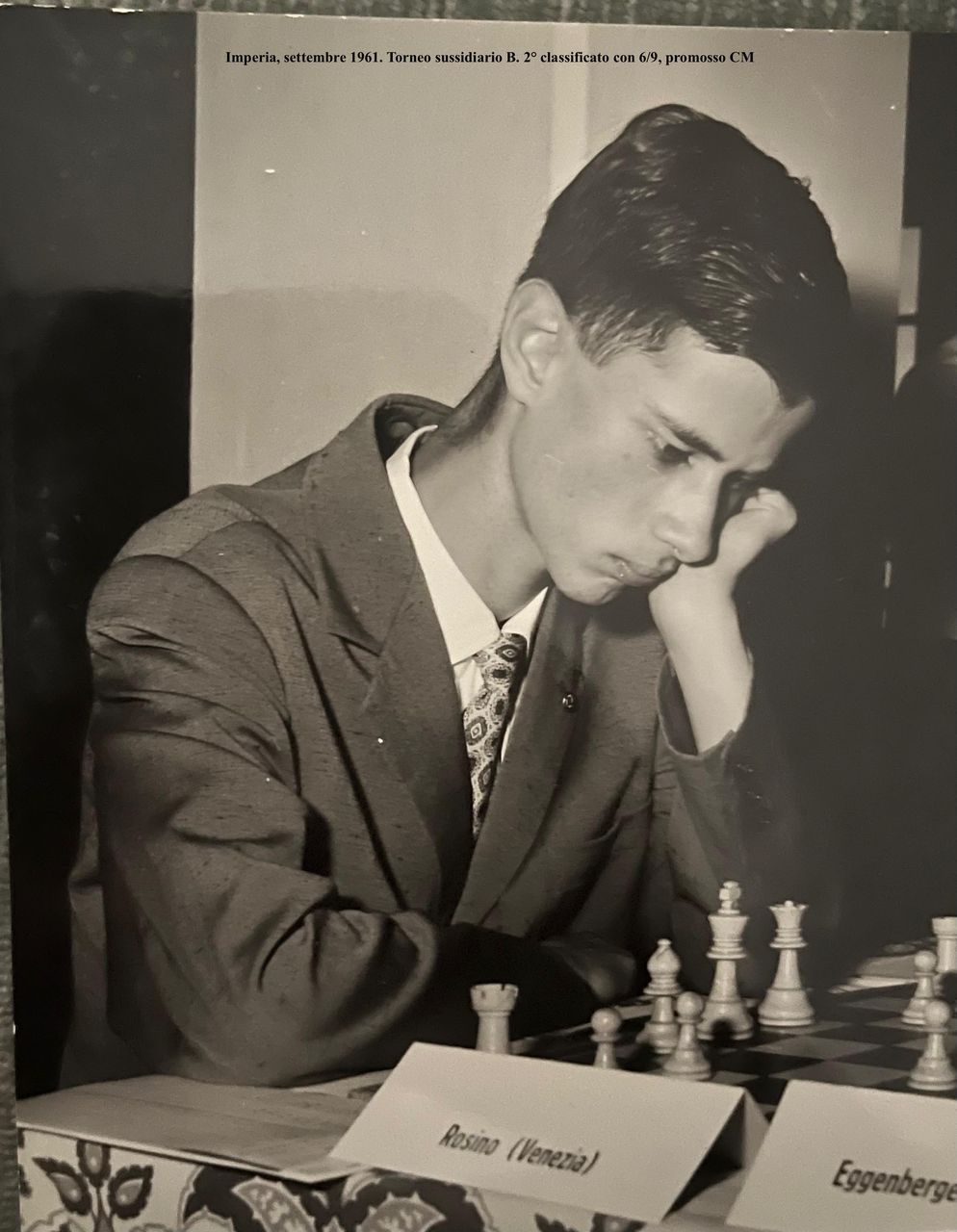
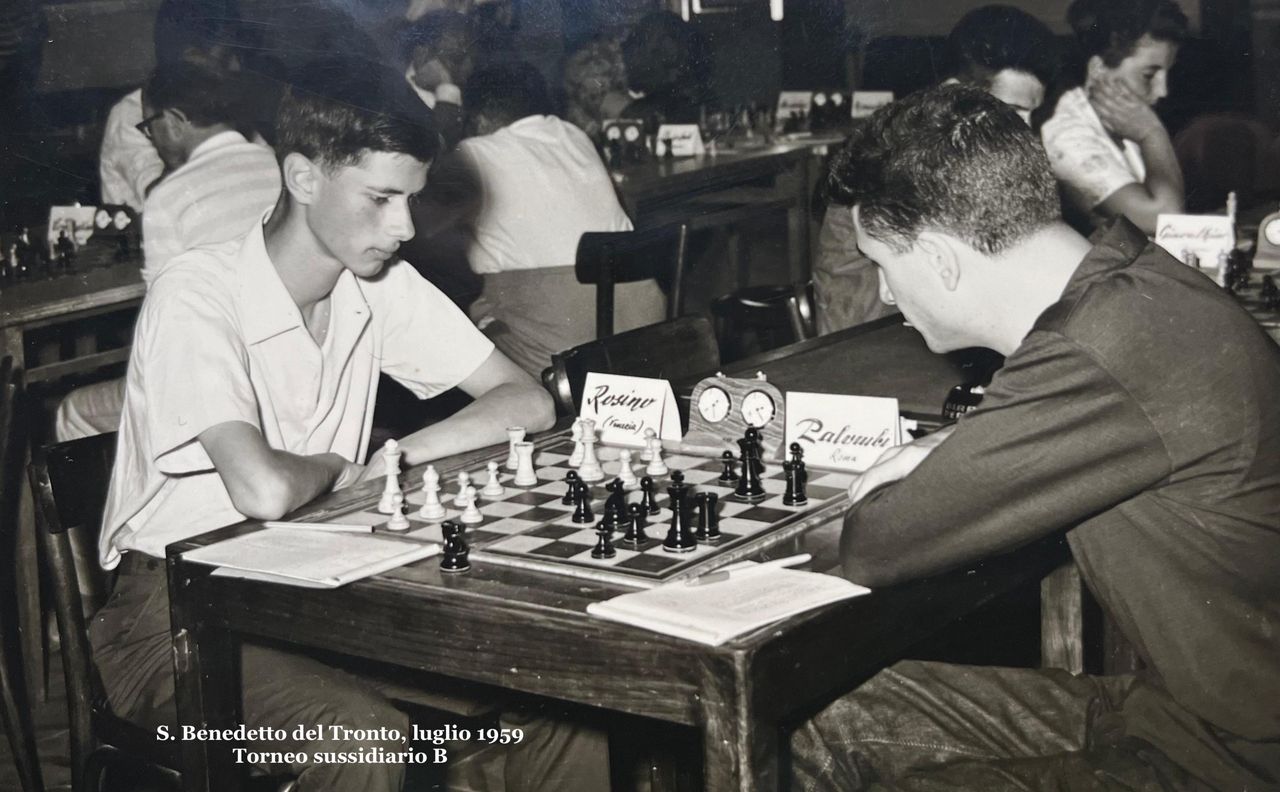
In 1959, Rosino won the Group B subsidiary tournament in San Benedetto del Tronto. He utilized his prize money to travel across the Italian peninsula to compete in Imperia. Having entered the tournament as a 2nd social category player, Rosino departed Imperia officially decorated as a 1st National Category (Prima Nazionale) player.
Junior Dominance and Master Titles
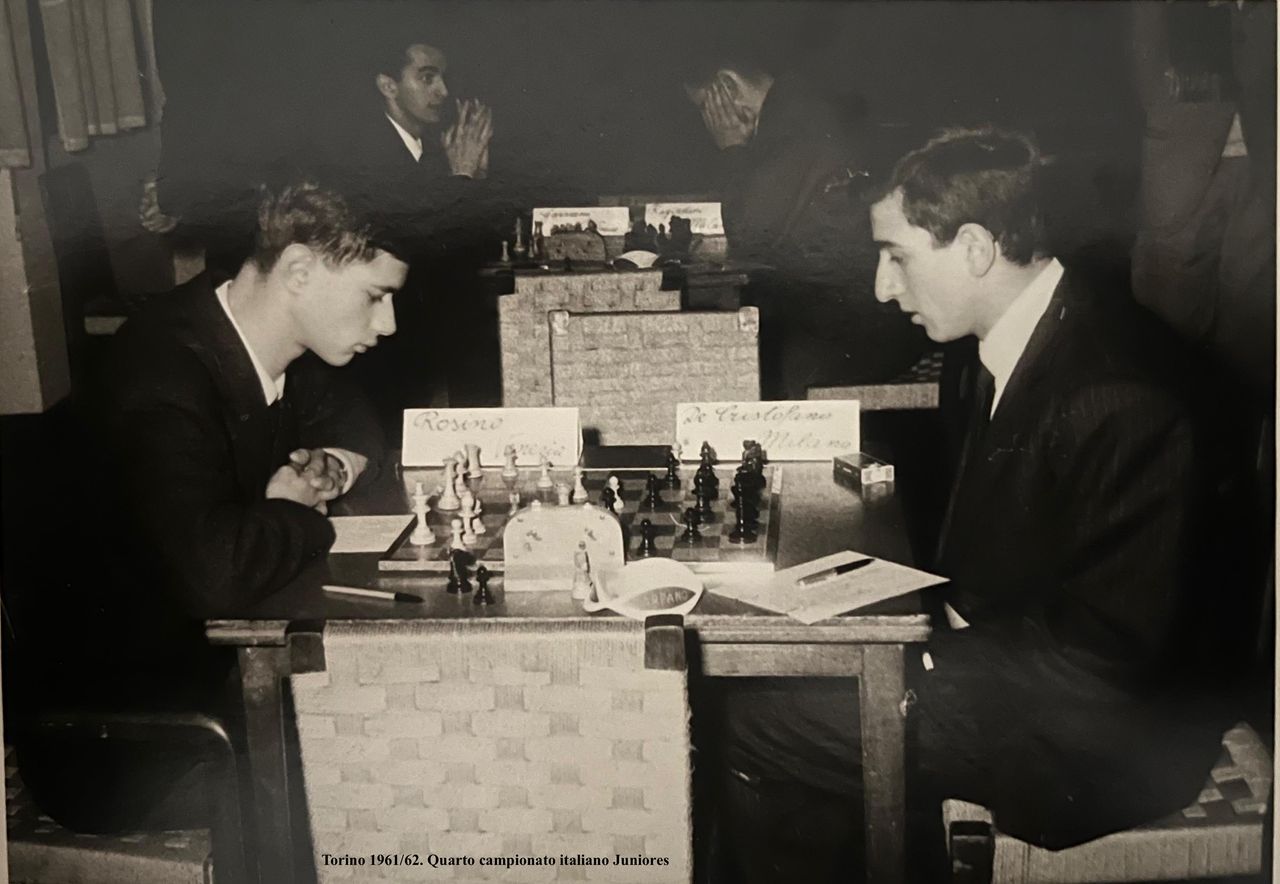
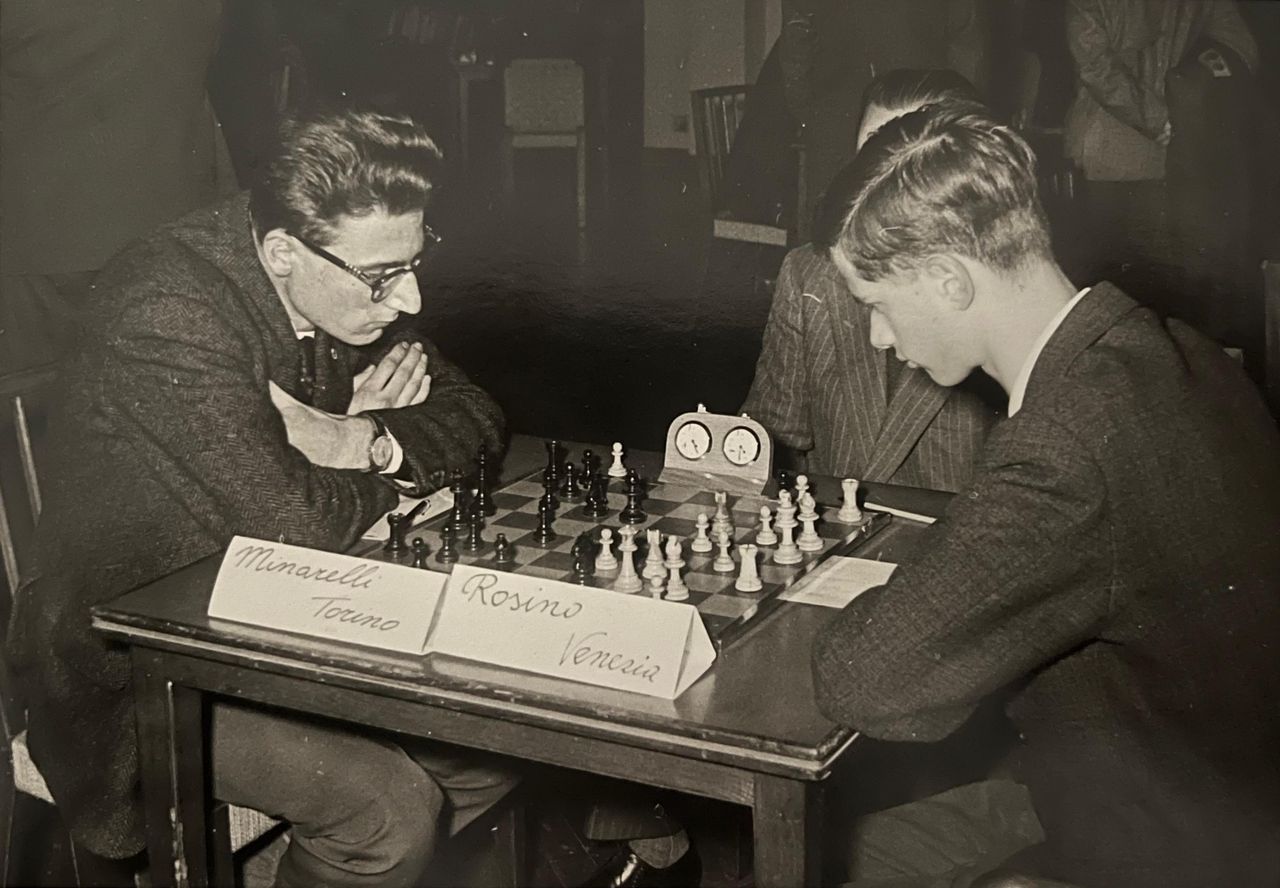
Directly following his triumph in Imperia, Rosino traveled to Varazze to compete in the 1959 Italian Junior Championship. He dominated the 14-player field, scoring 7.5/8 and taking the national title by a 2-point margin over the runner-up. Rosino proved his dominance was no fluke by winning the Italian Junior Championship again in 1960 and 1962 (securing his third title at age 20). He was awarded the title of National Master (Maestro Nazionale) in 1963 and earned the FIDE Master (Maestro FIDE) title in 1983, establishing himself as the strongest and most decorated player in Venetian chess history.
His record (MN):
- Italian Junior Championship 3-Time Winner: 1959 (Varazze), 1960 (Varazze), 1962 (Latina). Co-holder of the all-time national victory record (alongside Niccolò Ronchetti).
- Italian Senior Championship 5-Time Gold Medalist: 2005 (Ponte Arche), 2006 (Ponte Arche), 2007 (Ponte Arche), 2010 (Arvier), 2011 (Courmayeur). Record holder for total senior national titles. 2-Time Silver Medalist: 2004 (Ponte Arche), 2008 (Ponte Arche).
- Italian Team Championship 2-Time Winner: 1971 (Asiago), 1977 (Castelvecchio Pascoli - individual gold).
- World Senior Team Championship Bronze Medalist: 2004 (Port Douglas, Australia - individual board bronze).
- Non-playing Captain / Head of Delegation for FSI at 6 consecutive Chess Olympiads: Manila (1992), Moscow (1994), Yerevan (1996), Elista (1998), Istanbul (2000), Bled (2002).
Breadth of Acquaintances
Throughout his life, Antonio Rosino maintained direct personal relationships with virtually every World Chess Champion from Mikhail Tal to Garry Kasparov, with the single exception of Bobby Fischer.
Facilitating Botvinnik's Honorary Doctorate (1991)
In 1991, the University of Ferrara conferred a Laurea honoris causa (Honorary Doctorate) in Mathematics upon former Soviet World Champion Mikhail Botvinnik. Rosino played a pivotal organizational and administrative role in facilitating this honor, bridging the international chess community with Italian academia to recognize Botvinnik’s contributions to mathematics and computer chess.
Teaching Career, Mentorship, and Personal Characteristics
Instructional Style and Personality
Parallel to his playing career, Rosino served as a high school mathematics teacher at Liceo Scientifico G.B. Benedetti in Venice. As a mentor, he possessed boundless, infectious passion for the game. He was famous for walking through the streets posting tournament flyers on public walls without concerning himself with municipal permits, trailing a casual entourage of students who followed him everywhere without actually doing anything useful. His telephone manner reflected his direct nature. After answering with a standard "Pronto" and hearing the caller ask, "Ciao signore, come stai?" ("Hello sir, how are you?"), Rosino would immediately cut in with "Dimmi tutto" ("Tell me everything"). He had little interest in discussing his own health or indulging in empty pleasantries, preferring to address the purpose of the call instantly. When his students achieved tournament successes, Rosino insisted on conducting rigorous post-mortem game analysis before permitting any celebration, famously declaring: "Be', allora festeggiamo!" ("Well, now let's celebrate!").
Late Life and Memory Precision
Rosino systematically organized his entire competitive career into 12 black binder notebooks, containing his original handwritten game score sheets from 1959 onward, maintained with immaculate order. During his final year of illness, when he was permanently bedridden at home, Rosino retained absolute mental lucidity and spatial recall. During weekly visits, he would direct visitors to the exact locations of specific books and game binders on his vast home bookshelves purely from memory, analyzing precise board positions and recounting contextual details from games played nearly seventy years prior.
The Scholarly, Archival, and Bibliographic Legacy of Antonio Rosino
by Luca D´Ambrosio and Michael Negele
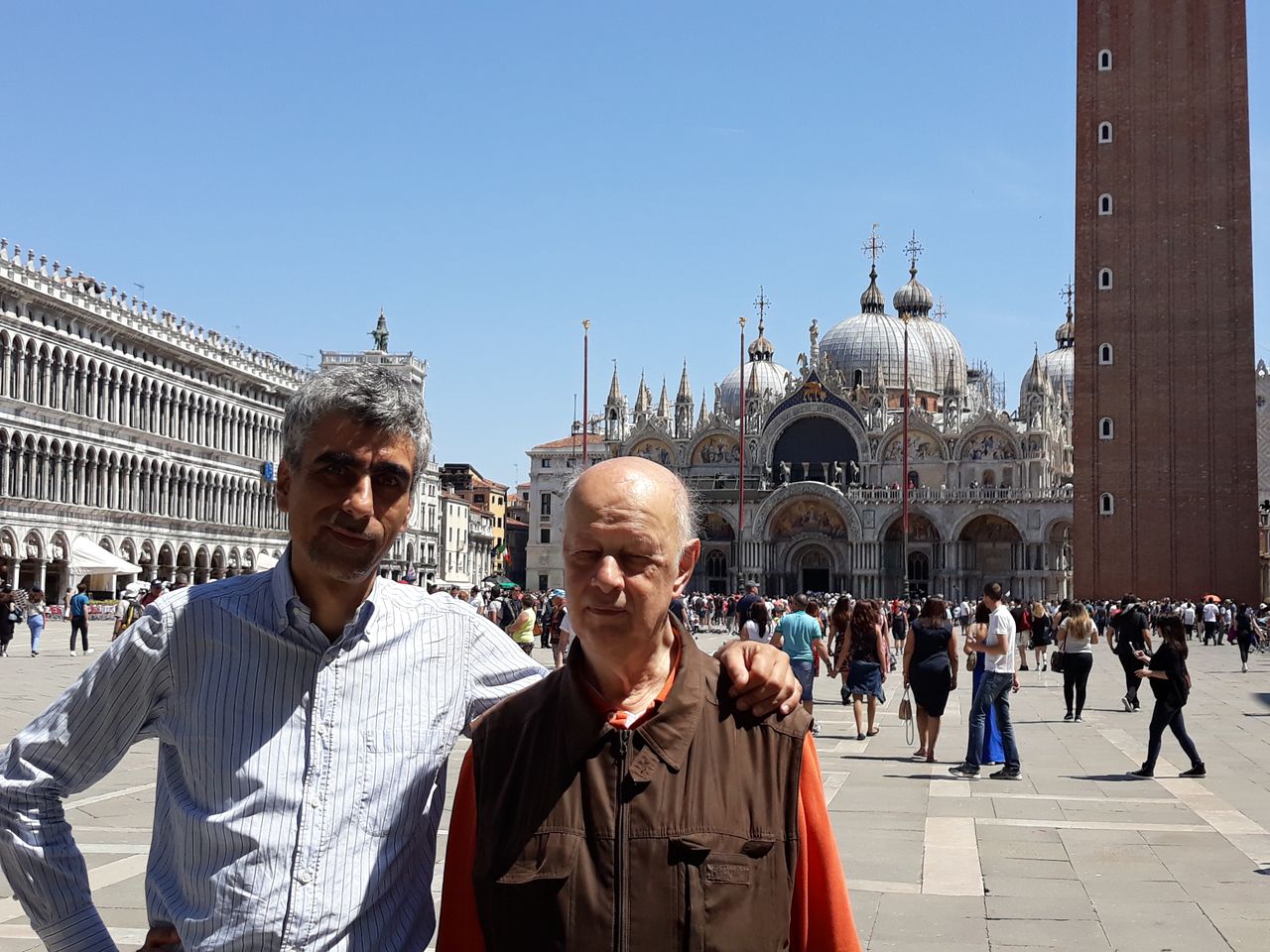
Antonio Rosino (March 3, 1942 – August 17, 2026) occupies a singular position in 20th- and early 21st-century European chess historiography. Operating at the intersection of elite sports performance, scientific pedagogy, and archival preservation, Rosino successfully bridged the often distinct domains of competitive chess mastery and source-critical historiography. Over a career spanning more than six decades, he established himself not only as one of Italy's premier chess players and trainers but also as the nation's primary systematic chronicler, bibliographer, and archival conservator.
Rosino's administrative and instructional credentials were equally substantial. He was instrumental in drafting the official Italian Chess Federation (FSI) regulations for modern Master (M) title norms, attained the highest national coaching rank of Istruttore Capo (Chief Instructor), served as a Formatore di Istruttori (Instructor Trainer), directed the CONI Youth Center at the Circolo Scacchistico "Esteban Canal" in Venice, and taught chess history and theory at the Università della Terza Età in Venice starting in 2009.
Major Scholarly Collaborations in Italian Chess Historiography
Rosino was the anchor of an intellectual network that transformed Italian chess historiography from casual, amateur collecting into a disciplined academic field grounded in archival verification, primary bibliographic cataloging, and socio-cultural contextualization.
Adriano Chicco and Storia degli scacchi in Italia
Rosino’s landmark scholarly contribution was his multi-year collaboration with Adriano Chicco (1907–1990), the long-acknowledged dean of Italian chess historians. Together, they authored the definitive standard reference work Storia degli scacchi in Italia: Dalle origini ai giorni nostri, published in 1990 by Marsilio Editori in Venice as a monumental 640-page monograph. The division of research between the two co-authors was methodological and epochal:
- Adriano Chicco investigated medieval origins, early modern manuscripts, Renaissance courtly treatises, and 18th-century developments.
- Antonio Rosino directed the source-critical research for the 19th and 20th centuries. He systematically reconstructed modern tournament structures, collated historical game scores, and contextualized the social-cultural evolution of Italian chess.
In his chapters, Rosino contextualized chess as a sensitive barometer of broader Italian socio-political transformations. He analyzed the sport's institutional transition from 19th-century bourgeois reading circles and municipal cafes to its ideological mobilization under Fascism—specifically detailing its reorganization within the Opera Nazionale Dopolavoro (OND) and the subsequent imposition of racial laws in 1938. Furthermore, Rosino chronicled the post-1945 civic and institutional reconstruction of Italian chess, highlighting the pivotal contributions of international figures such as Grandmaster Esteban Canal and Italian Chess Federation president Eugenio (Giuseppe) Szabados. Recognized for its exhaustive documentation, Storia degli scacchi in Italia was immediately institutionalized as a foundational research text by major cultural repositories, including the Museo Internazionale degli Scacchi Giovanni Longo in Marostica and the Società Scacchistica Torinese (SST).
Alessandro Sanvito
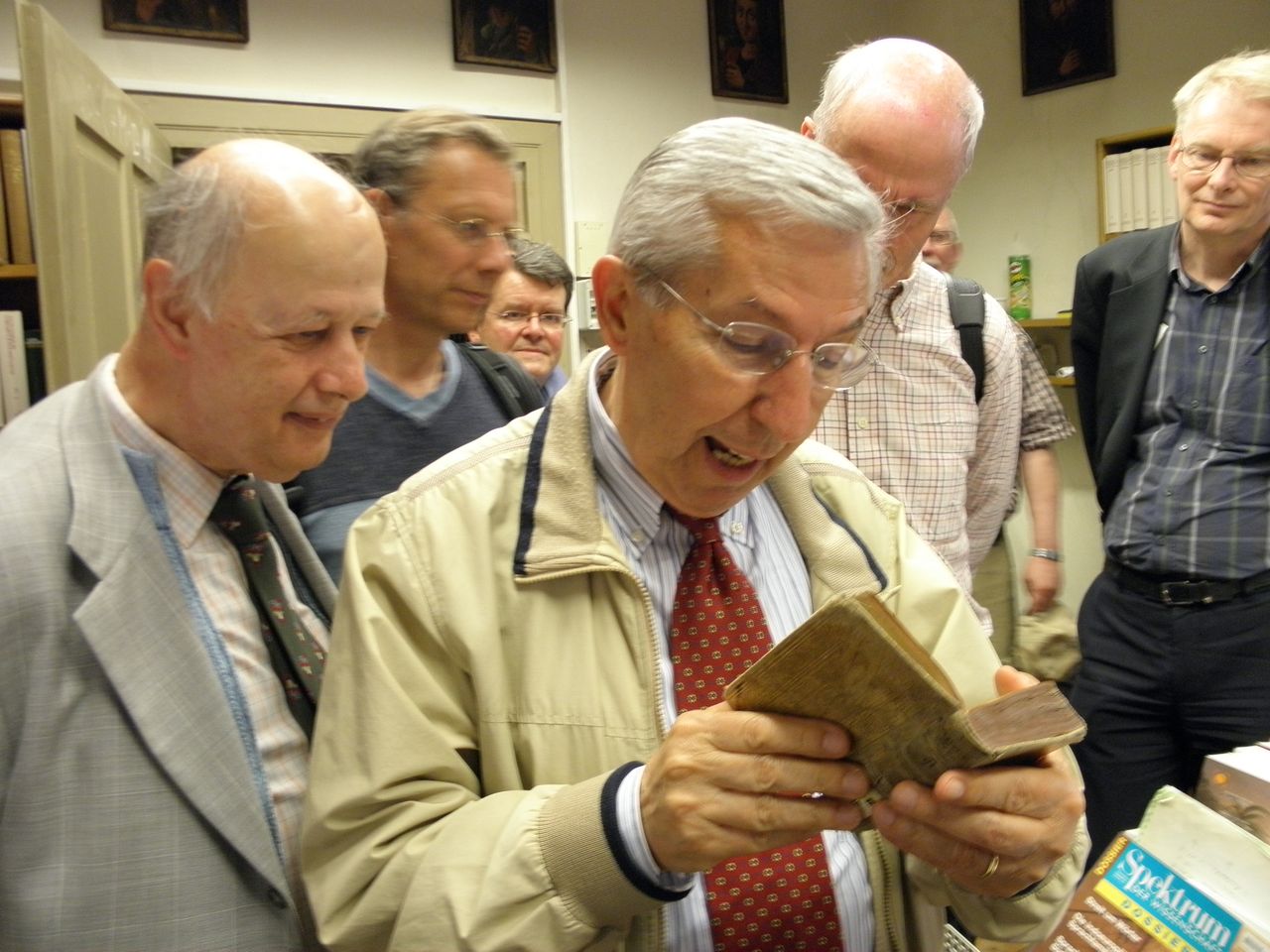
Rosino maintained a close research partnership with Alessandro Sanvito (14 December 1938 - 21 October 2020), a preeminent Italian chess historian and bibliographer. Sanvito acted as a vital collaborator during the compilation of Storia degli scacchi in Italia, supplying rare archival manuscripts, primary documents, and critical notes. Both scholars subsequently represented Italian historiography in international research bodies, such as the Chess History & Literature Society.
Romano Bellucci
Working through the Venice-based academic journal Scacchi e Scienze Applicate (SSA), Rosino collaborated extensively with Romano Bellucci (9 July 1940 - 15 September 2017), his friend from school times. Their work focused on co-organizing specialized historiographical projects, publishing analytical papers, and executing regional bibliographic initiatives designed to locate and catalog obscure Italian chess manuscripts, early periodicals, and club commemorative publications.
Prof. Carlo Alberto Pagni
Collaborating with Prof. Carlo Alberto Pagni (13 February 1931 - 2 March 2009), Rosino worked to institutionalize the academic study of chess literature within Italy. Together, they co-organized historical symposia, planned research colloquia, and coordinated national and international academic meetings that connected Italian researchers with the broader European chess literature community.
Chess History & Literature Society (CH&LS / Ken Whyld Association) Meetings in Italy
Antonio served as an academic host, lecturer, and organizer for three major international meetings convened on Italian soil.
Torino Meeting (May 22, 2006)
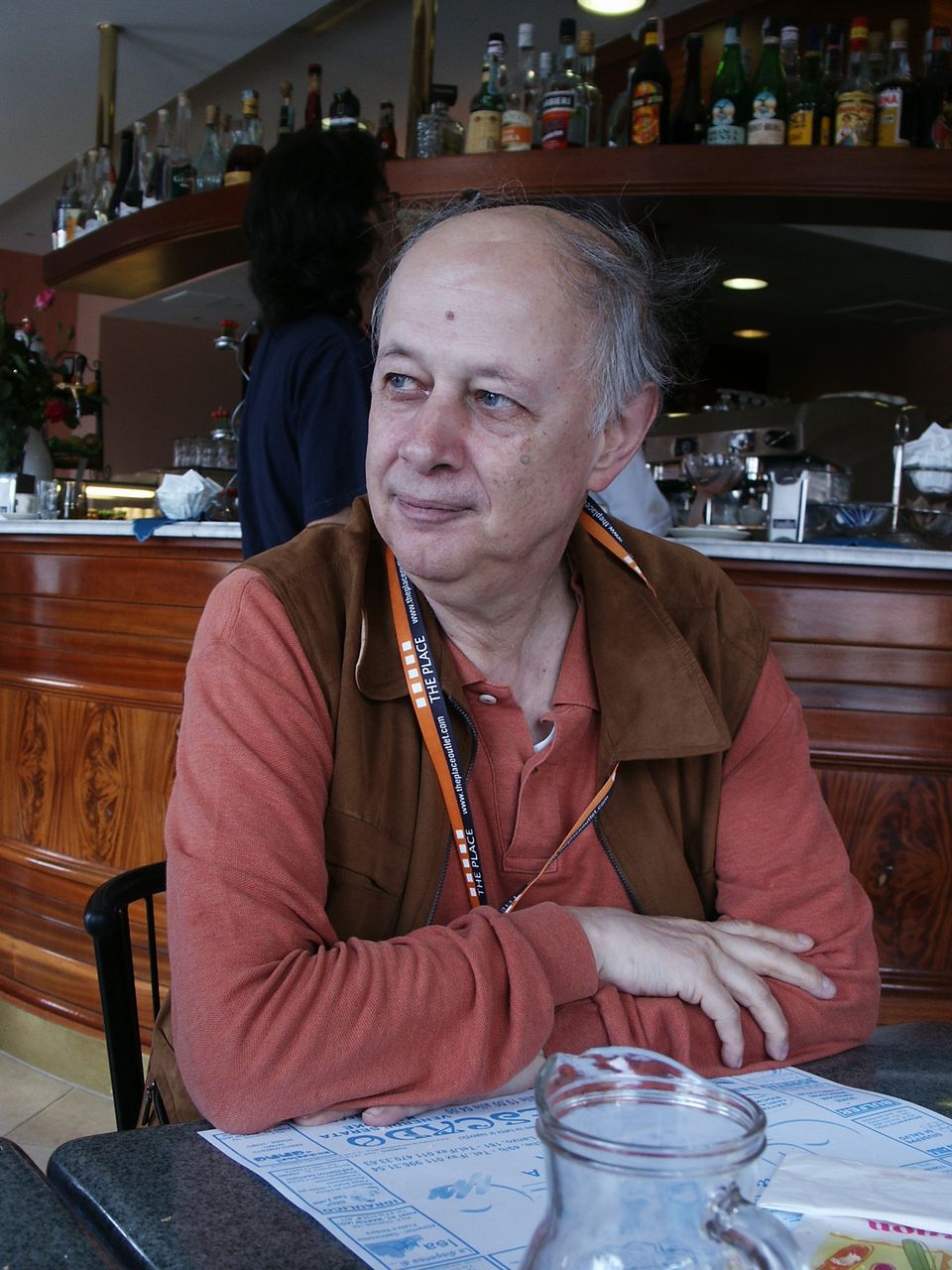
Conducted during the 37th Chess Olympiad in Torino, this international gathering took place in the precinct of the Oval Lingotto and Olympic Village. The proceedings were characterized by unique operational logistics: international KWA delegates (including Michael Negele, Jurgen Stigter, and Andreas Saremba) experienced initial security delays entering the restricted Olympic Village. Access was secured when Negele made contact inside the tournament hall via Tamás Erdélyi and Prof. Carlo A. Pagni, who telephoned Alessandro Sanvito to convene the full meeting with Rosino and Romano Bellucci. Key outcomes of this meeting included:
- In-depth scholarly deliberations with Romano Bellucci regarding the international bibliographic initiative "Bibliography of commemorative publications of German Chess Clubs till 1914".
- An official initiative proposed by the Italian contingency (Rosino, Sanvito, Pagni, and Bellucci) to organize a dedicated KWA regional conference in Venice.
[Annual general meeting of the Ken Whyld Association in the Swiss Museum of Games and impressions of the Chess Olympiad at Turin,
Gallery: KWA members in Turin]
Venice Regional Meeting – 'Caissa in La Serenissima' (May 23–25, 2008)
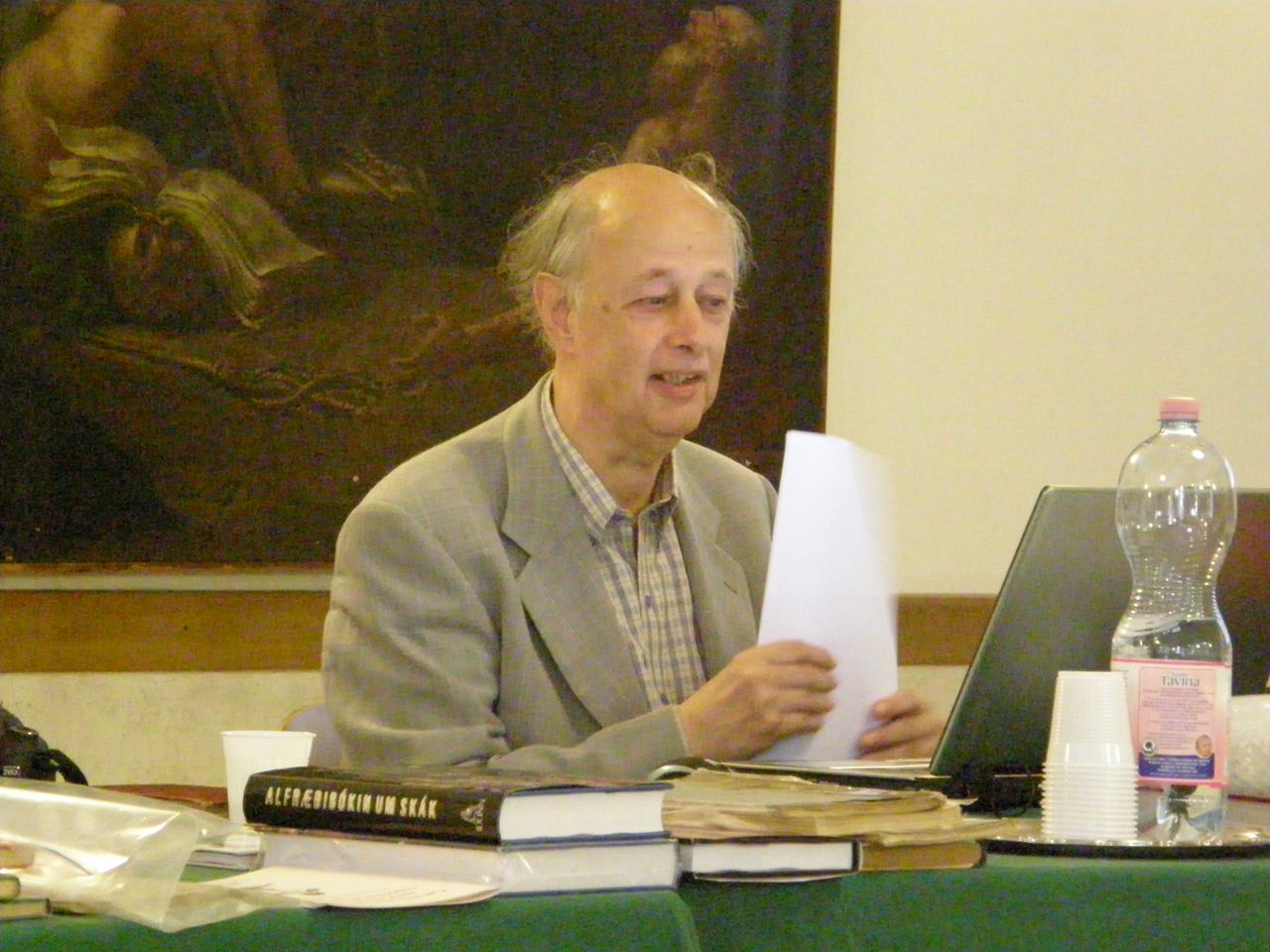
Co-organized by Rosino, Sanvito, Bellucci, and Luca D'Ambrosio, this conference convened at the Casa Cardinale Piazza in Venice. Rosino served as the primary academic host and keynote presenter. His primary contributions comprised:
- Featured Academic Lecture: Delivering his original research paper, "The Golden Age of Chess in Venice (1929–1953)", which evaluated the strategic, institutional, and socio-cultural flourishing of Venetian chess in the mid-20th century.
- Historiographical Fieldwork: Leading an expert walking tour of historical Venetian chess landmarks, during which he synthesized municipal history, maritime and naval engineering (Marinetechnik), and regional chess lore.
- Private Archival Exhibition: Hosting an evening session at his private home in Cannaregio, where international scholars inspected original volumes from the housed Italian Chess Federation (FSI) Central Library.
[Photo report on our Venice meeting by Michael Negele
Gallery: Antonio Rosino's Lecture | Evening at Antonio Rosino's Home]
Bolzano Meeting (May 18–20, 2011)

Organized to commemorate the late Prof. Carlo A. Pagni, the Bolzano gathering featured Rosino as a primary presenter on Venetian chess history. The meeting incorporated academic exchanges with European bibliophiles and structured research visits to local monastic libraries, including the Muri-Gries Abbey and the Franciscan Monastery.
Editorial Work, Translations, and Chess Journalism
Rosino made significant contributions to public journalism and the reception of foreign chess literature in Italy.
Soviet Literature Translations & Prefaces
Utilizing his reading knowledge of Russian, Rosino systematically introduced key theoretical works of the Soviet chess school to Italian readers. He edited, introduced, and provided technical notes for Italian translations of major Soviet texts:
- Giocare a scacchi by Yuri Averbakh and Mikhail Beilin (1984) – Preface & editorial work.
- La tua prima mossa by Alexei Sokolsky (1985) – Preface & technical editing.
- Le combinazioni nel centro partita by Igor Bondarevsky (1986) – Preface & introduction.
Periodical Leadership & Journalism
Rosino served as editor-in-chief of Contromossa (the official publication of ARCI Scacchi) for three years, maintained a directorship role on ARCI Dama Scacchi, and contributed regular historical and analytical essays to En Passant, L'Italia Scacchistica, Scacco, and Torre & Cavallo. In mainstream print journalism, he authored a weekly chess column for Il Gazzettino for a decade, launched a regular column in La Nuova Venezia in 2009, and provided daily expert coverage for World Chess Championship matches in Il Gazzettino and Il Manifesto.
The Archival Rescue Mission, FSI Central Library, and Enduring Legacy
Rosino’s most significant physical legacy was the direct salvation of Italy’s national chess archive—an act that stands as an emblematic symbol of 20th-century European archival preservation, contrasting the vulnerability of physical cultural property against bureaucratic neglect.
The 1996 Rescue Operation
In 1996, during the FSI presidency of Alvise Zichichi, the Central Library of the Italian Chess Federation (Biblioteca Federale), then stored in Milan, faced bureaucratic dissolution and permanent dispersal. Recognizing the crisis, Rosino organized and personally funded a rescue mission:
- He hired a transport truck to evacuate hundreds of rare historical volumes, official federation records, and complete periodical runs from Milan to Venice.
- Because his home in the historical Cannaregio district was inaccessible to motorized road transport, Rosino transferred the entire collection onto a traditional Venetian flat-bottomed rowing boat (topa).
- Rosino personally rowed the collection across the Venetian lagoon and through the municipal canals directly to his residence.
Decades of Stewardship (1996–2023)
For nearly three decades, Rosino housed, preserved, and maintained the Biblioteca Federale inside his private home entirely at his own expense, keeping it accessible to visiting international scholars. In parallel, he assembled one of Italy’s most extensive private chess libraries.
Cataloging and Relocation (2023–2024)
Between December 2023 and June 2024, a formal cataloging project was coordinated by Tino Testolina. Working alongside young local chess players, the team systematically inventoried the collection, enabling its structured transfer to a permanent facility in Vicenza. Rosino’s parallel project — cataloging his vast private library — remained incomplete at his death.
Honors and Memorial Tributes (2026)
On May 12, 2026, the Italian Chess Federation conferred upon Rosino its career award "Una vita per gli scacchi" ("A Life for Chess"). The award was presented in person on June 9, 2026, by FSI Vice President Veronika Goi and Tino Testolina.
Following Rosino’s death on August 17, 2026, at the age of 84, tributes were published across educational and sports institutions:
- Pierluigi Passerotti: FIDE Master and FSI official Pierluigi Passerotti authored an obituary titled "Il mio ricordo di Antonio Rosino" on Uno Scacchista (September 2, 2026). Passerotti praised Rosino's analytical rigor, competitive games, intellectual generosity, and decade-long care for his ill wife. He recounted personal walking tours of Venice where Rosino seamlessly interwoven chess history, local municipal lore, and maritime engineering (Marinetechnik).
- Tino Testolina: Speaking for the Veneto Regional Committee, Testolina commended Rosino’s moral integrity, constructive criticism, and historic rescue of the federal library, describing him as the guardian patron of Italy's chess heritage.
- Liceo Scientifico "G. B. Benedetti": Headmaster Marco Vianello released an official statement commemorating Rosino's decades of service as an educator in mathematics and physics and his promotion of scholastic chess.
It is with the utmost veneration that we pay tribute to an illustrious lifetime of achievement, devoted entirely to the noble game of chess and the nurture of generations to come.
Luca D´Ambrosio and Michael Negele
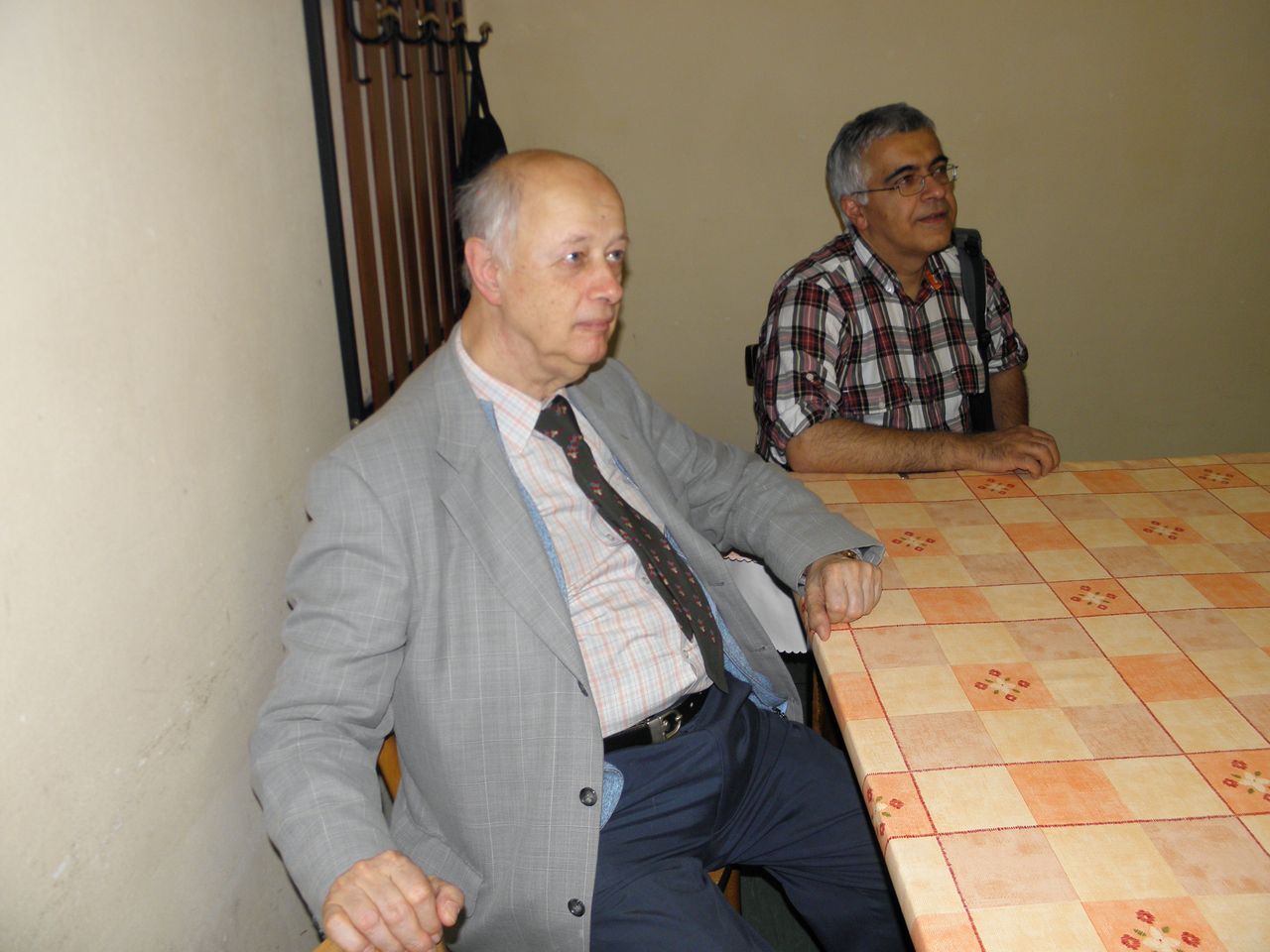
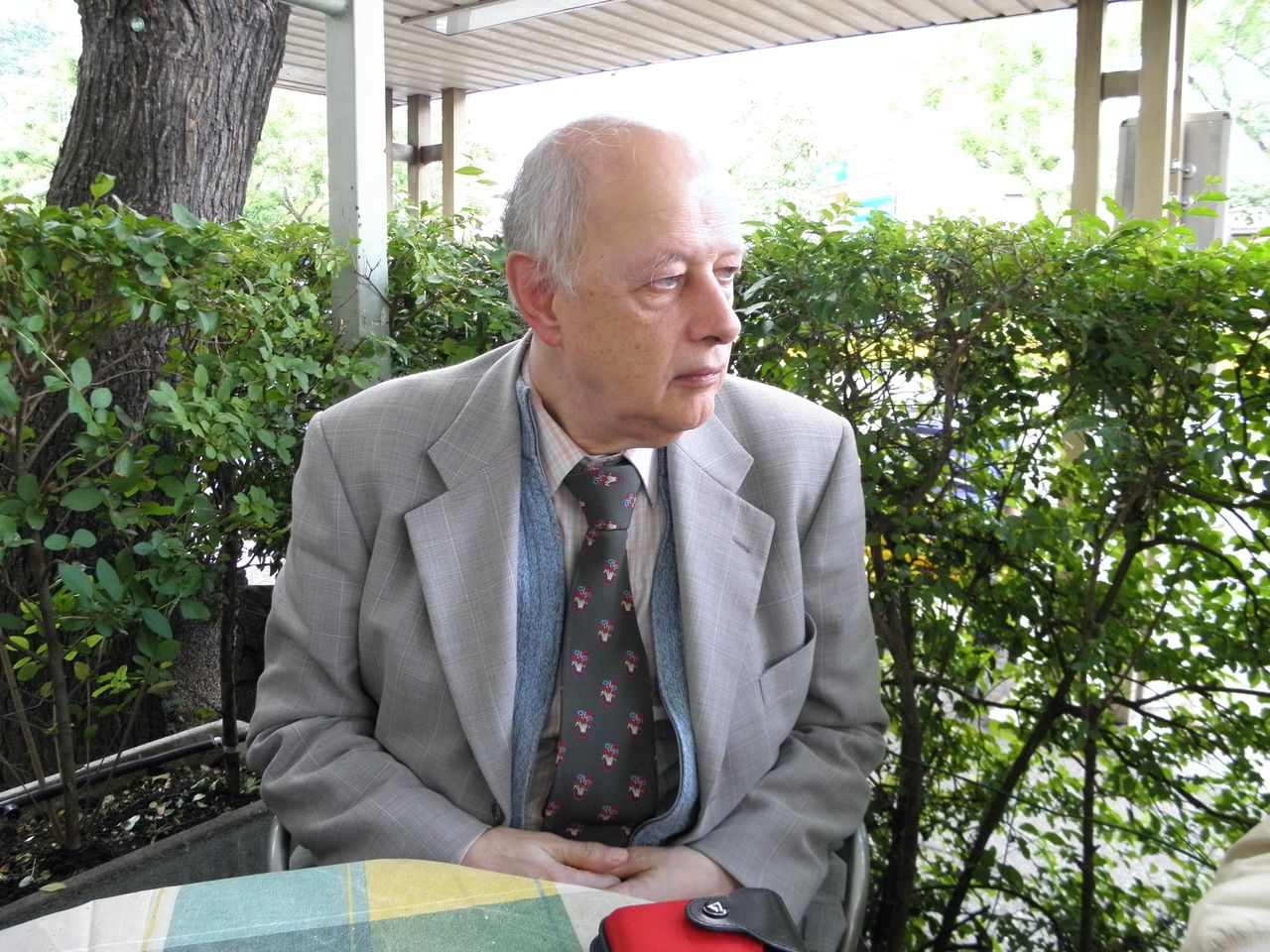
More photos of Antonio Rosino
-
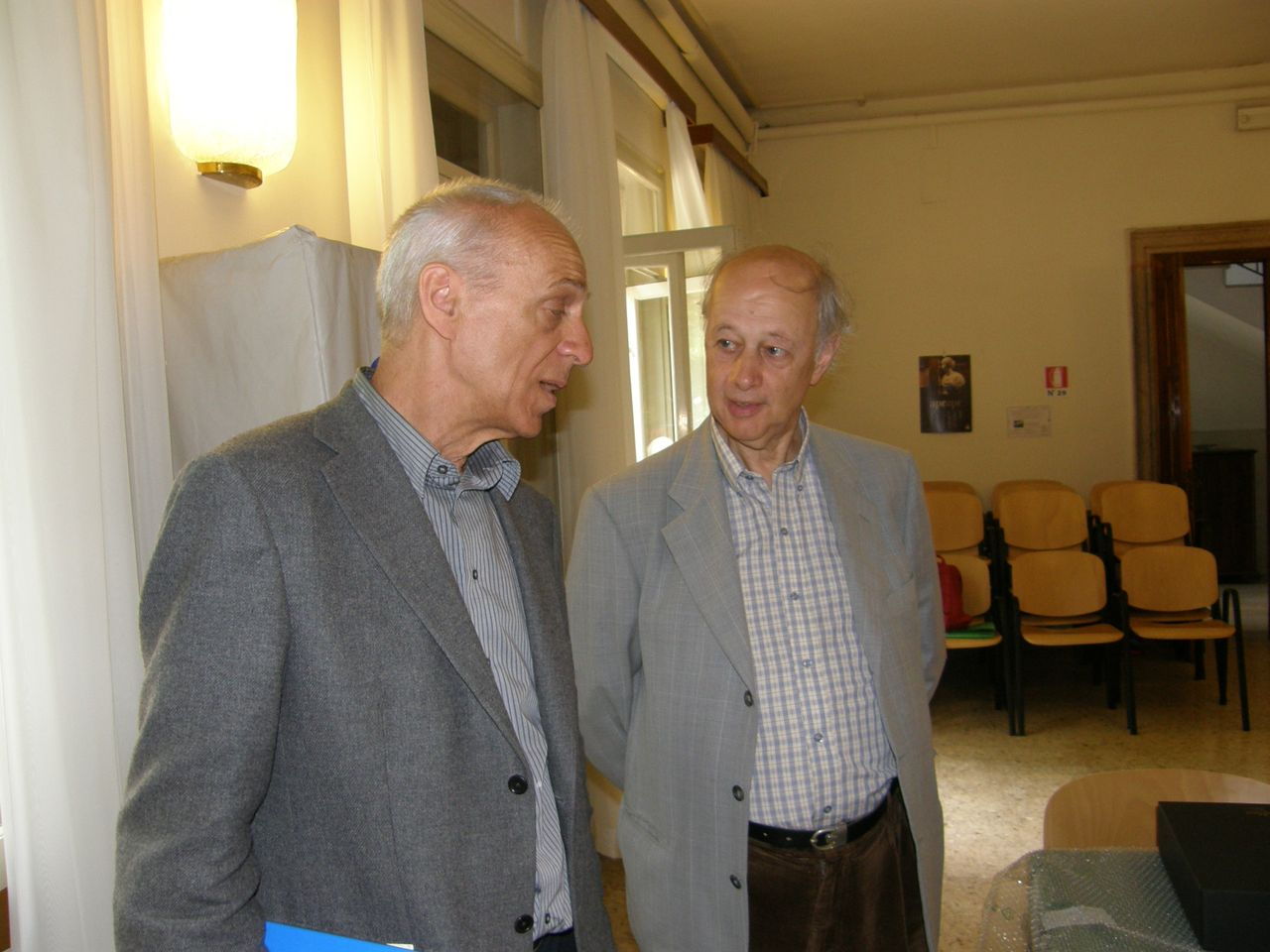
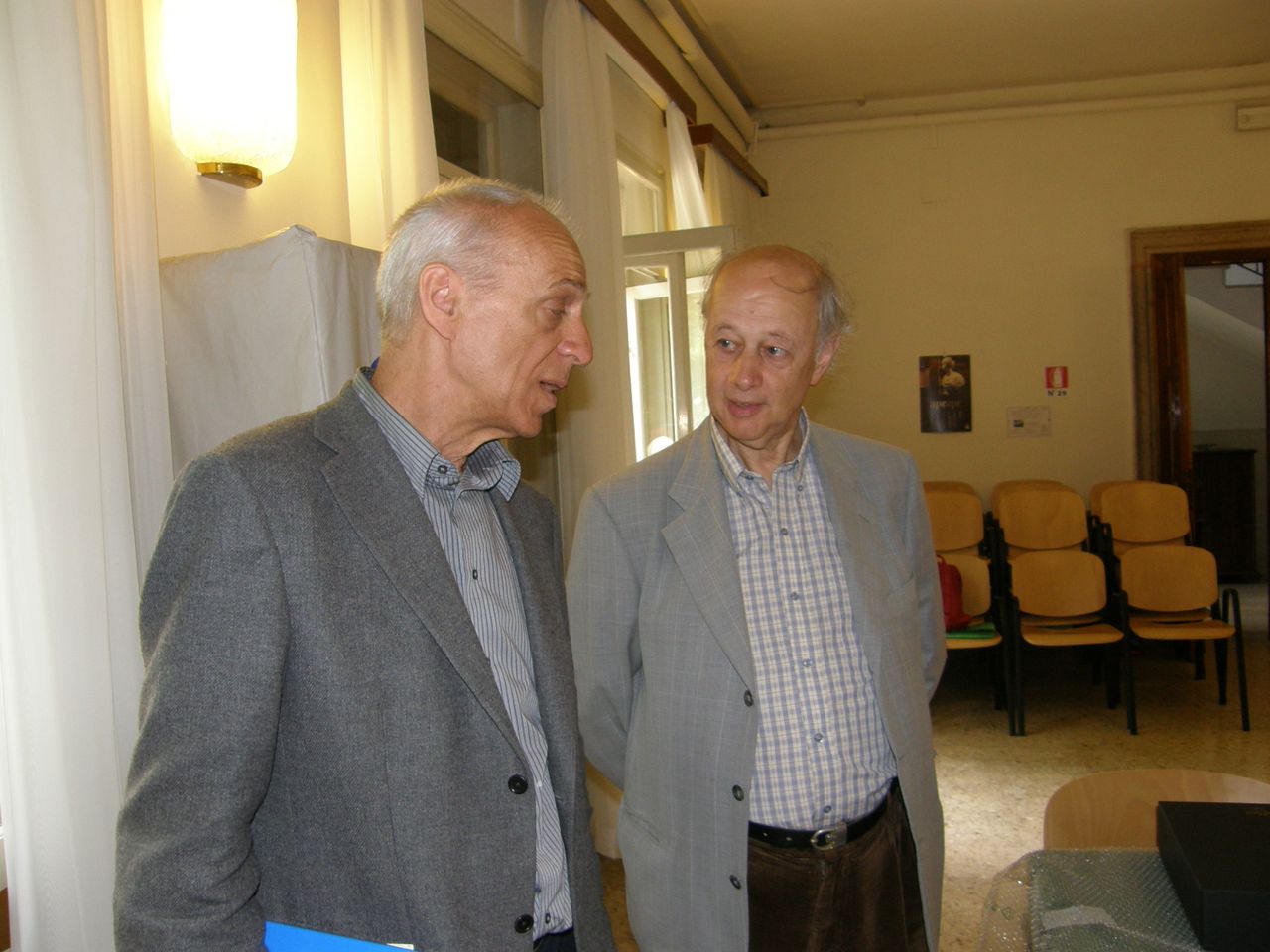
Harrie Grondijs and Antonio Rosino, Venice 2008 -
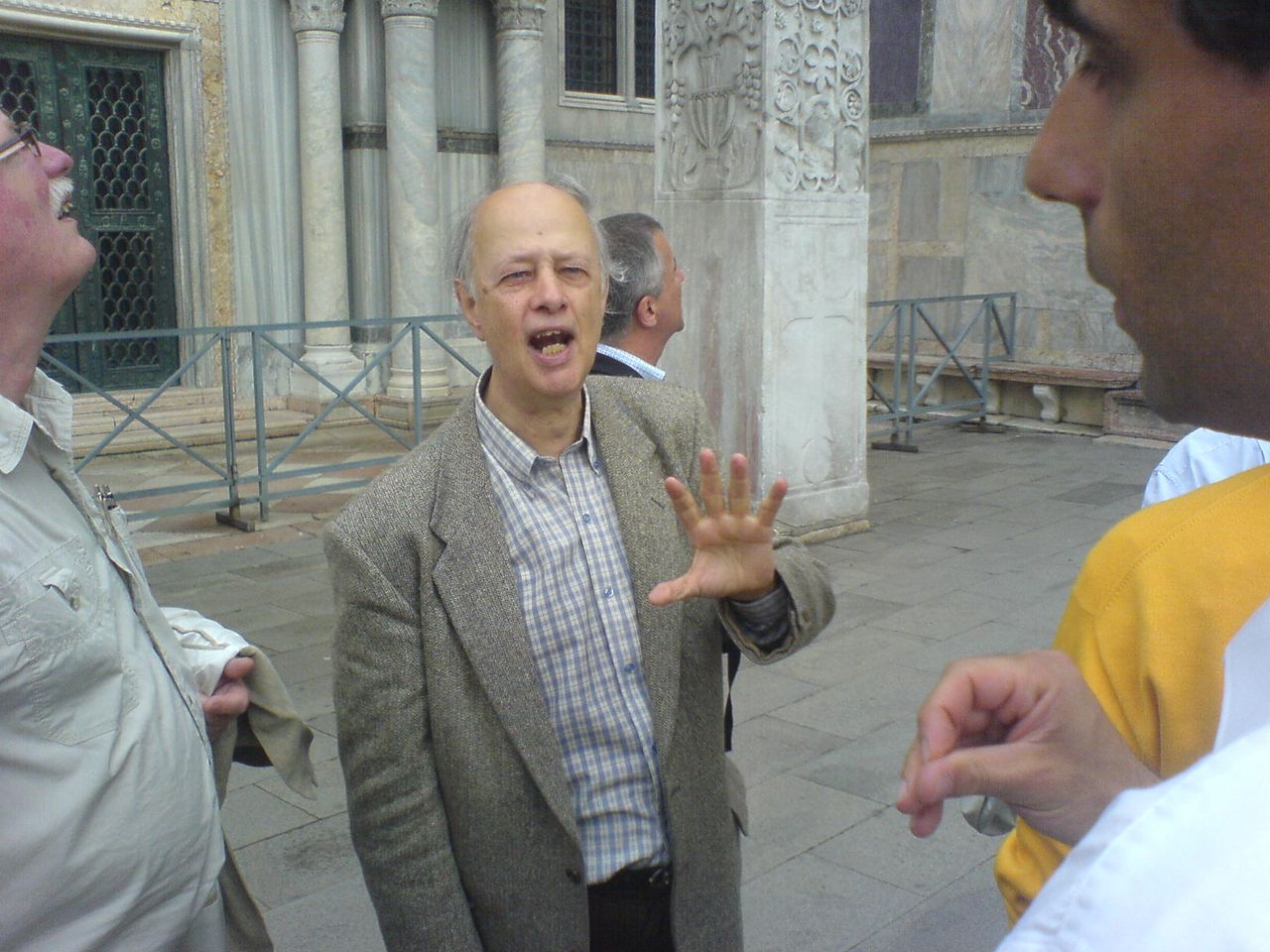
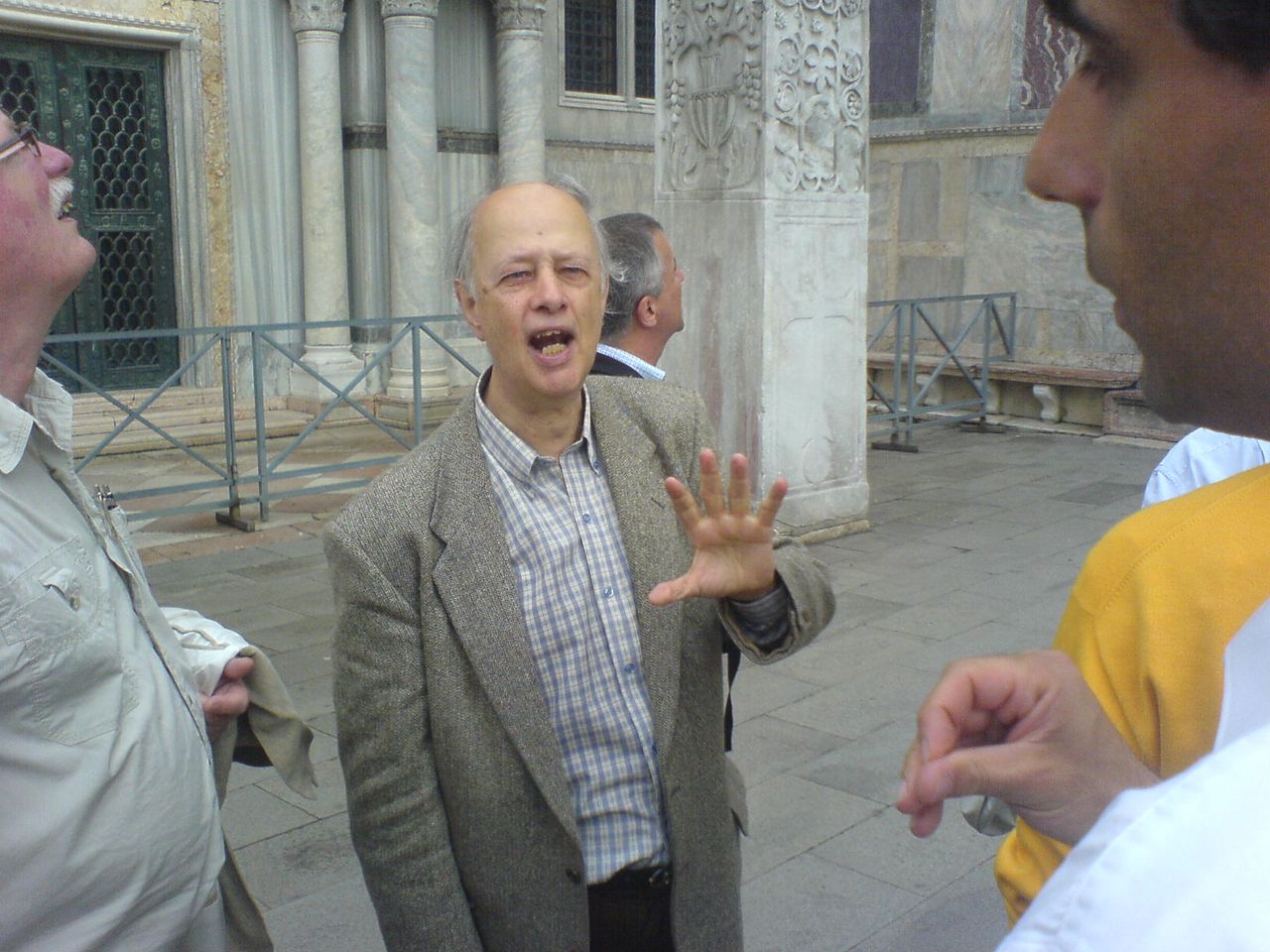
Antonio Rosino as a city guide, as lively as ever, Venice 2008 -
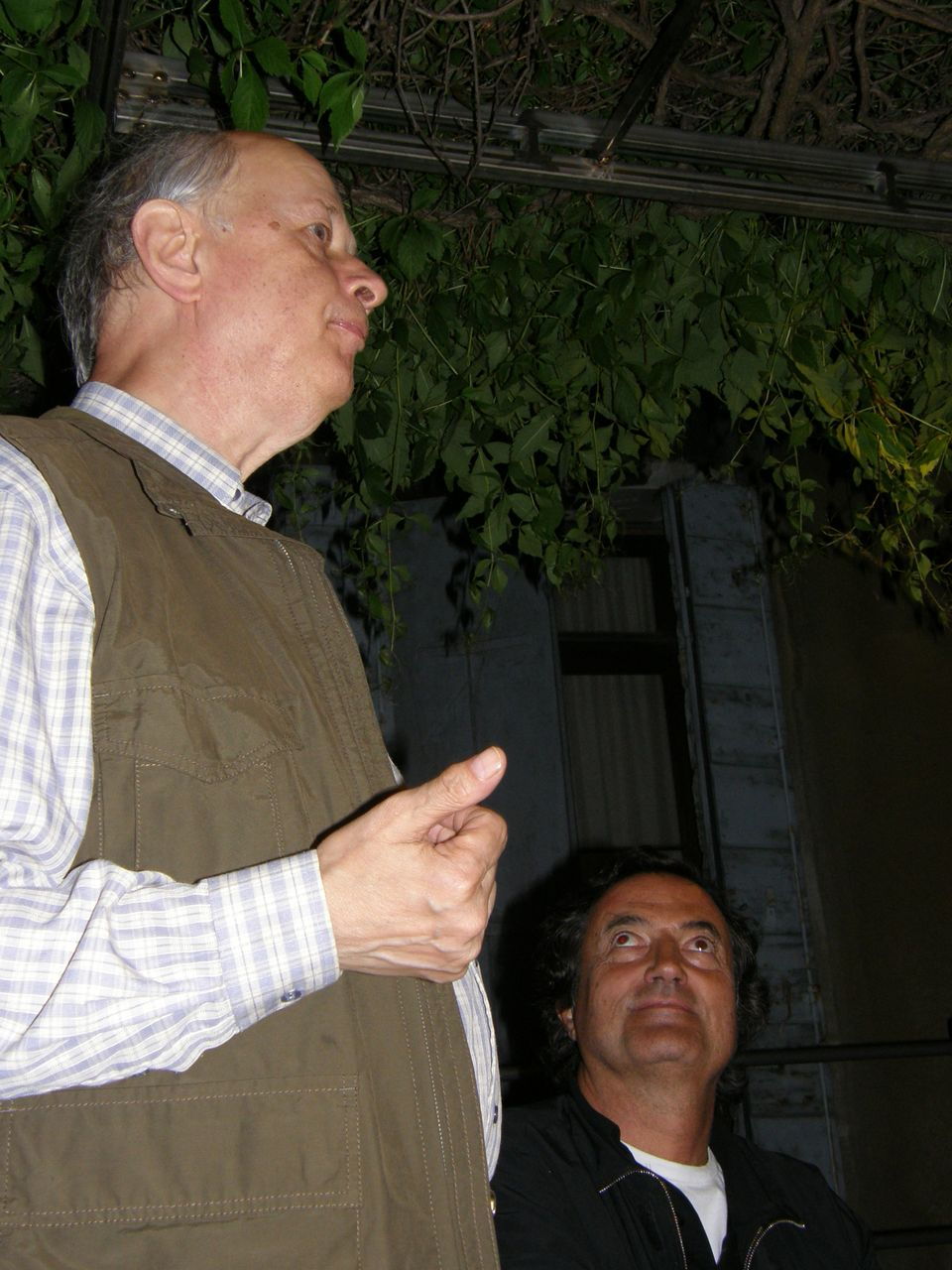
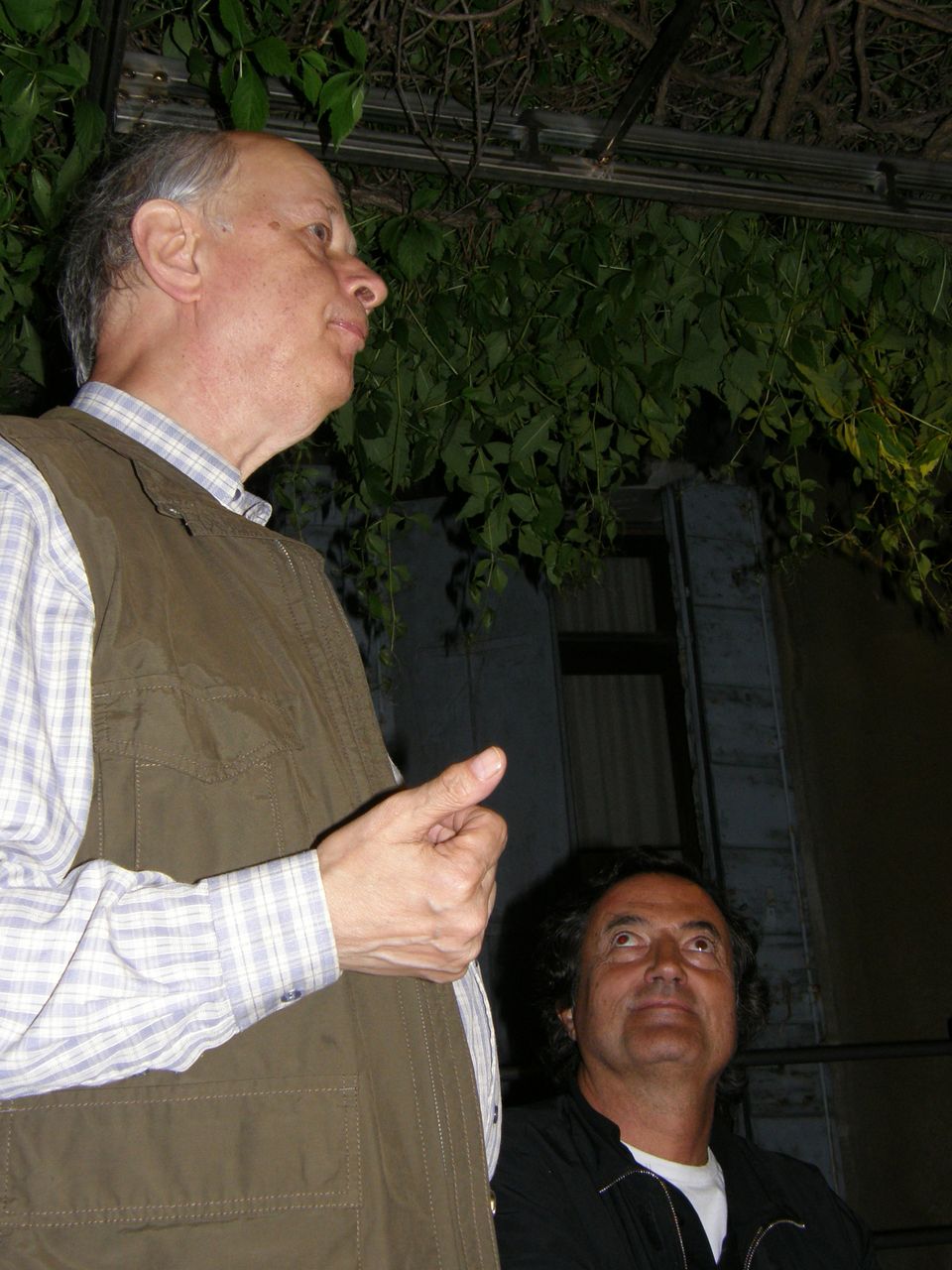
Antonio Rosino and M. Artigas, Venice 2008 -
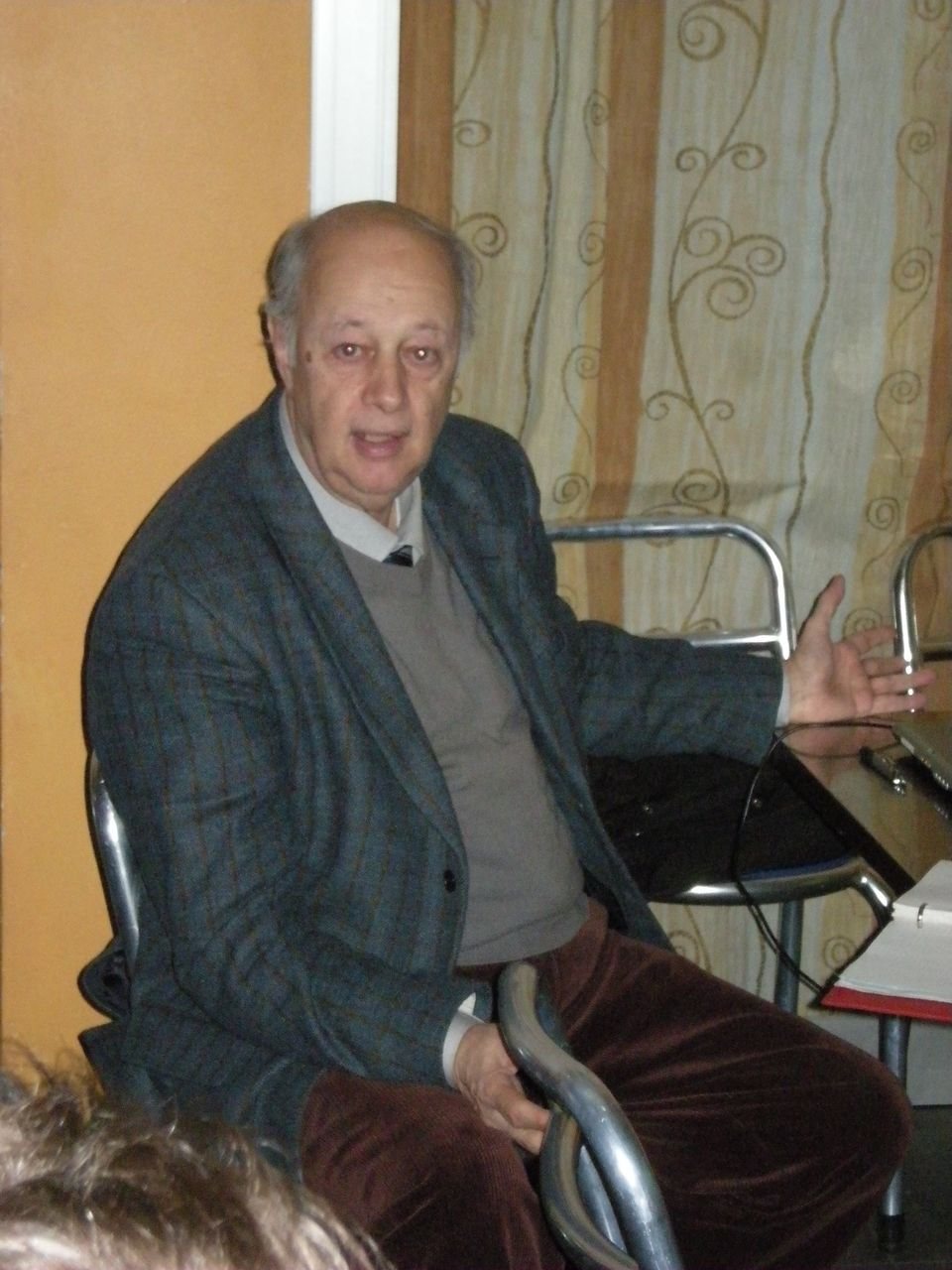
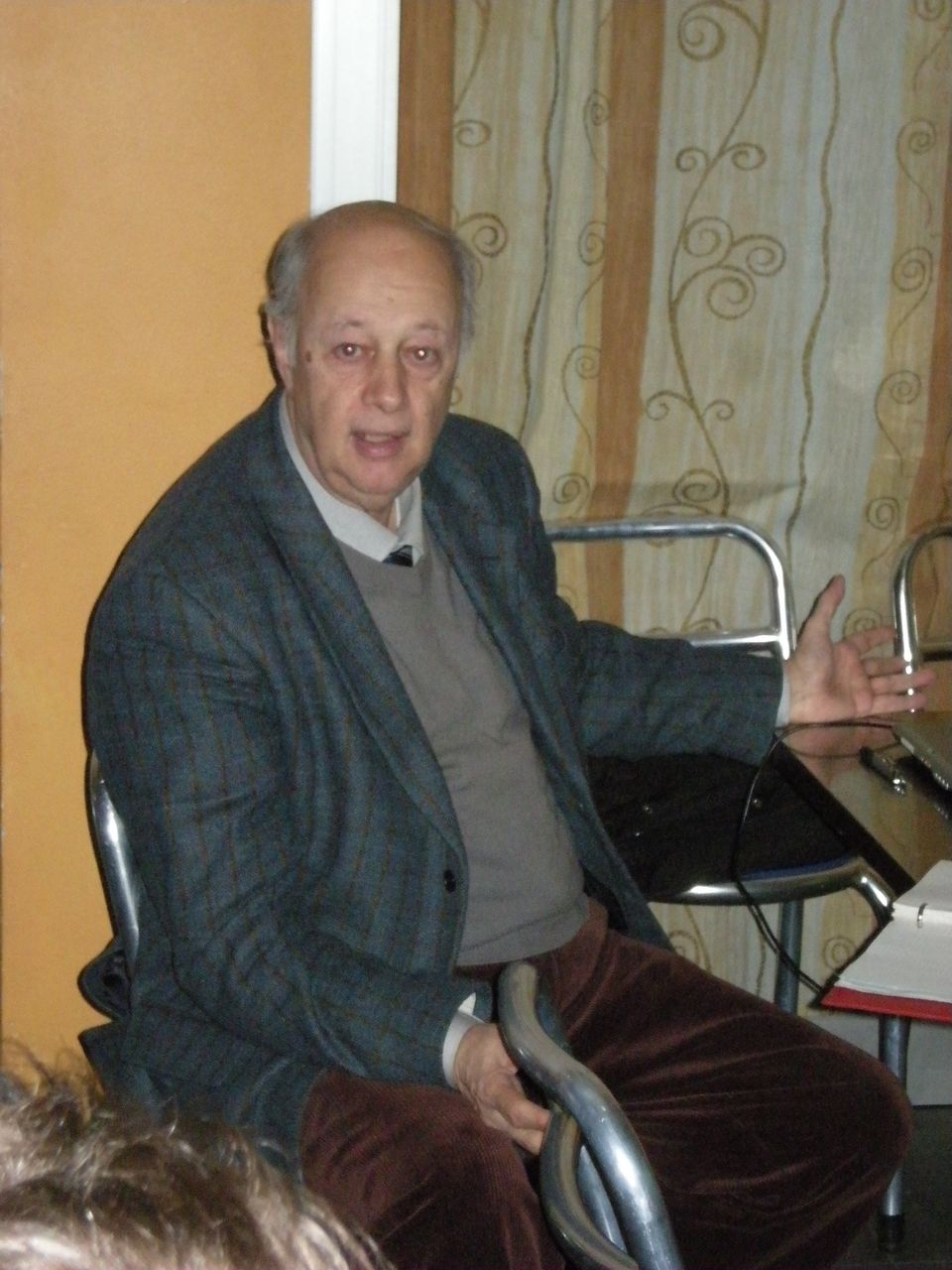
Antonio Rosino, Bolzano 2010 -
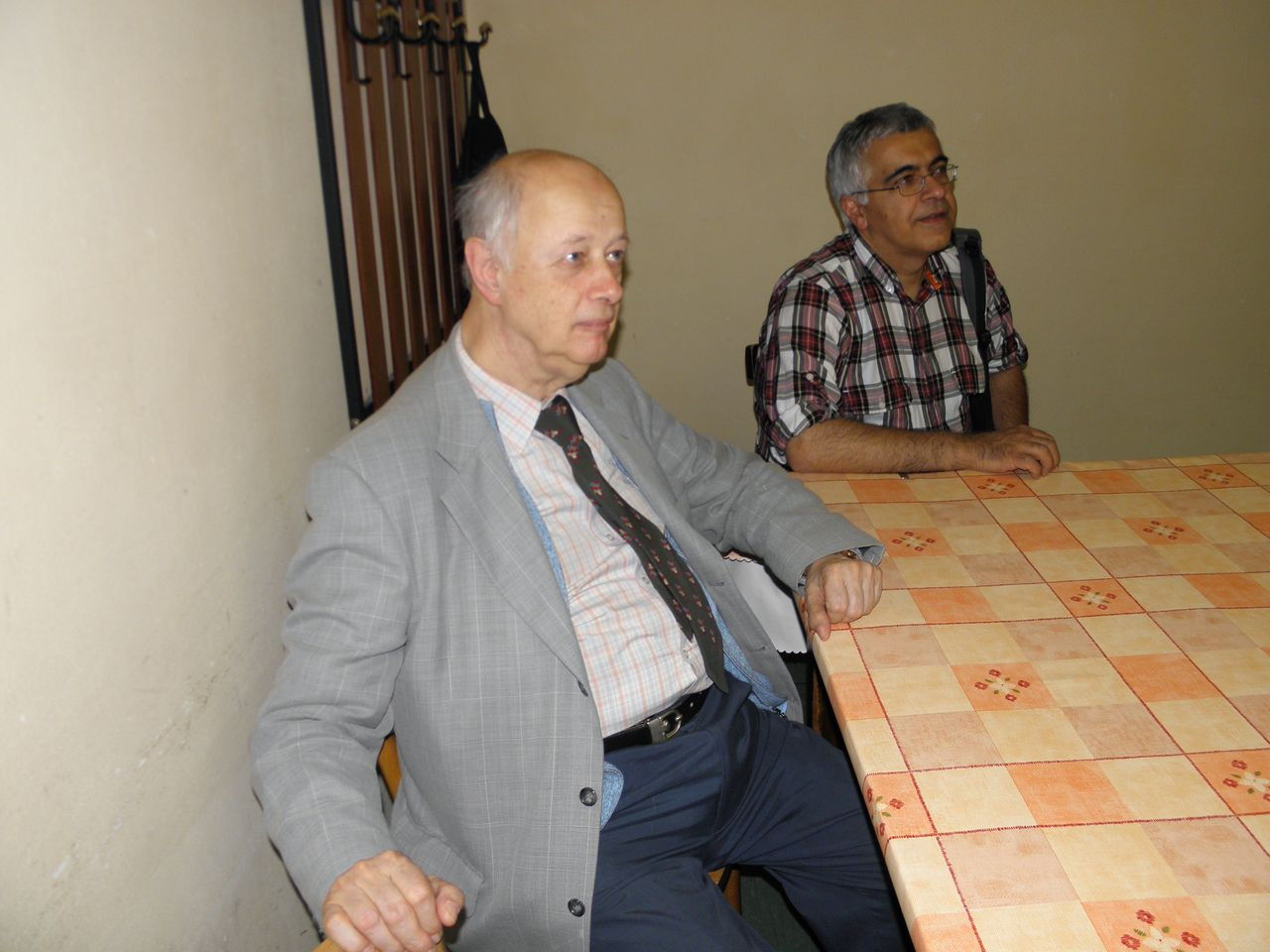
Antonio Rosino and Toni Preziuso, Bolzano 2011 -
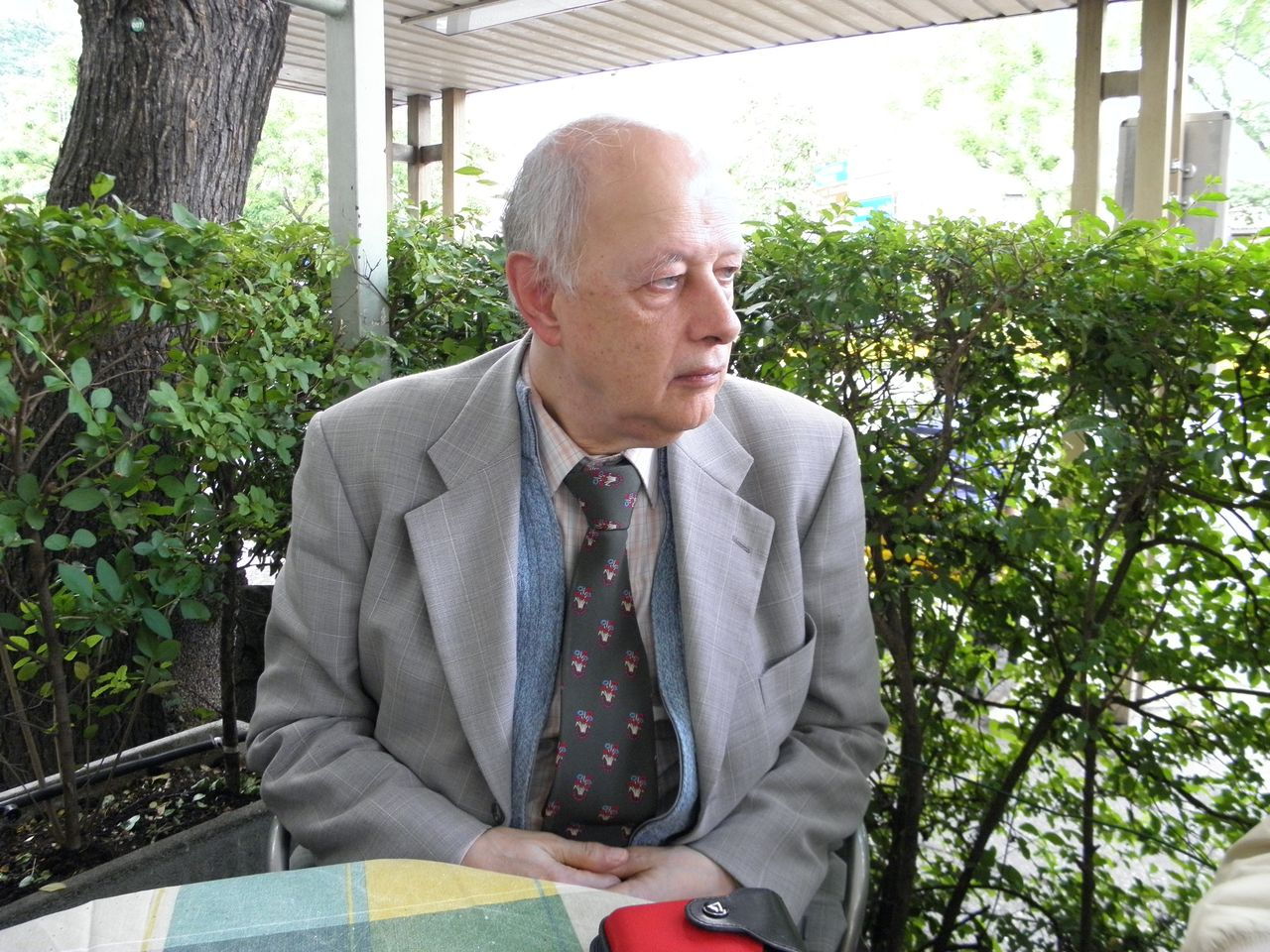
Antonio Rosino, Bozen 2011
See also:
- Senior World Championship 2010 at Arco
- Birthday Greetings / Birth Announcements: 2005-03
- Publications of our Members: Rosino, Antonio